
When children refuse or completely break off contact with a parent after a separation, this poses difficult questions for families and professionals. A new collection of scholarly essays addresses the causes, the current state of research, and the controversies surrounding parental alienation.
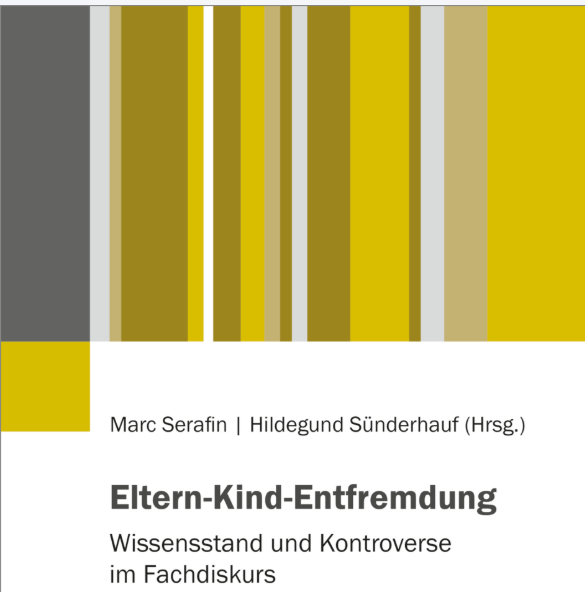
In August 2026, the specialist book "Parental Alienation – State of Knowledge and Controversy in the Academic Discourse" was published by Beltz Juventa . Edited by Marc Serafin and Hildegund Sünderhauf, the work brings together contributions from various scientific and professional perspectives.
The central question is one that has also occupied the Association for Parental Responsibility (VeV Switzerland) for many years: How can children be effectively protected from violence, abuse and neglect without losing sight of those children who lose contact with a parent for other reasons?
When children reject a parent
Breaks in contact between children and parents can have various causes. They can be an expression of traumatic experiences, a disturbed parent-child relationship, or a justified protective reaction. However, they can also arise from family conflict dynamics and the influence of other people.
The distinction is crucial. A refusal of contact should neither be hastily interpreted as a result of estrangement, nor should a possible influence on the child be ruled out from the outset.
The editors of the anthology focus in particular on the question of how induced parent-child alienation can be scientifically classified and what consequences this has for practice.
A controversial academic debate
The concept of parental alienation is controversially discussed in science, jurisprudence and psychosocial practice.
While some experts refer to scientific research on alienation processes and their possible consequences for affected children, other experts warn in particular against the uncritical application of such concepts in highly contentious family proceedings.
The editors believe that international research findings are not sufficiently considered in German-language academic discourse. With this edited volume, they aim to contribute to the scholarly debate and make insights accessible for practical application.
The articles address topics such as the state of research, professional interventions, legal issues, and the importance of the child's wishes and the child's welfare.
Child protection must not be a one-way street
For VeV Switzerland, the fundamental question is not new.
For many years, we have been committed to ensuring that children, after a separation, generally retain the opportunity to maintain viable relationships with both parents, provided this is in their best interests.
At the same time, it goes without saying that children and parents must be effectively protected from violence, abuse and other forms of danger.
Both concerns are part of a comprehensive understanding of child protection.
Anyone investigating a potential alienation process must therefore carefully consider indications of violence and other traumatic experiences. Conversely, a break in contact should not be considered unproblematic simply because a child explicitly rejects contact.
Crucial factors are a careful assessment of the individual situation, consideration of the child's wishes, and a professionally sound evaluation of the child's welfare.
Using scientific findings for practical application
The new collection of essays provides an opportunity to discuss the different perspectives on parent-child alienation in greater depth.
For affected families, this discussion is by no means merely academic. The assessments of experts, counseling centers, courts, and child protection authorities can have far-reaching consequences for the relationships between children and their parents.
That is precisely why we need an objective debate that takes different scientific positions seriously, critically examines findings, and avoids sweeping explanations.
VeV Switzerland welcomes the scientific study of this topic and will continue to follow the discussion closely.
About the book
Parental alienation – state of knowledge and controversy in the professional discourse
Edited by Marc Serafin and Hildegund Sünderhauf,
Beltz Juventa, 2026,
259 pages
, ISBN 978-3-7799-9282-0
Further information is available from the publisher Beltz Juventa
Note: This book presentation is based on publicly available publisher information and the sample chapter. It does not constitute a complete academic review of all book chapters.